Dr Vicky Lewis

Clinical Psychologist, Counsellor, Systemic Practitioner and EMDR therapist

Clinical Psychology & Counselling help in Solihull & Online

Compassionate

Professional

Non-Judgemental

Confidential

Neuro and Trauma Informed

Welcome

Welcome to our talking therapy service which was founded and is run by

Dr Vicky Lewis

Chartered and Registered Clinical Psychologist, Systemic Practitioner, EMDR Therapist and Counsellor

Areas of Interest:

 Overwhelming feelings

(e.g. anxiety, anger, sadness)

Neurodivergence

(e.g. Autistic, ADHDer, AuDHDer etc.)

School trauma

Parenting through connection

Vicky's clinical and research experience spans over twenty years'.

Vicky now focusses on her independent practice with children, young people and adults.

PXL_20250211_144650220.PORTRAIT~3

Vicky is experienced in working with anxiety, difficult life events, neurodivergence, the challenges of parenting and how to connect with young people who can be hard to reach and engage.

Despite working with all ages, something that's important to us is raising awareness that our current education system is definitely not designed to suit everyone.

If you're struggling in the education system or you experienced upsetting and difficult events in school when you were younger, we strongly empathise and recognise the psychological impact of this.

Vicky works compassionately through a trauma and neuro informed lens.

d1ab0bf8-2f3d-4afa-9b12-2f9ab041f5d2~1

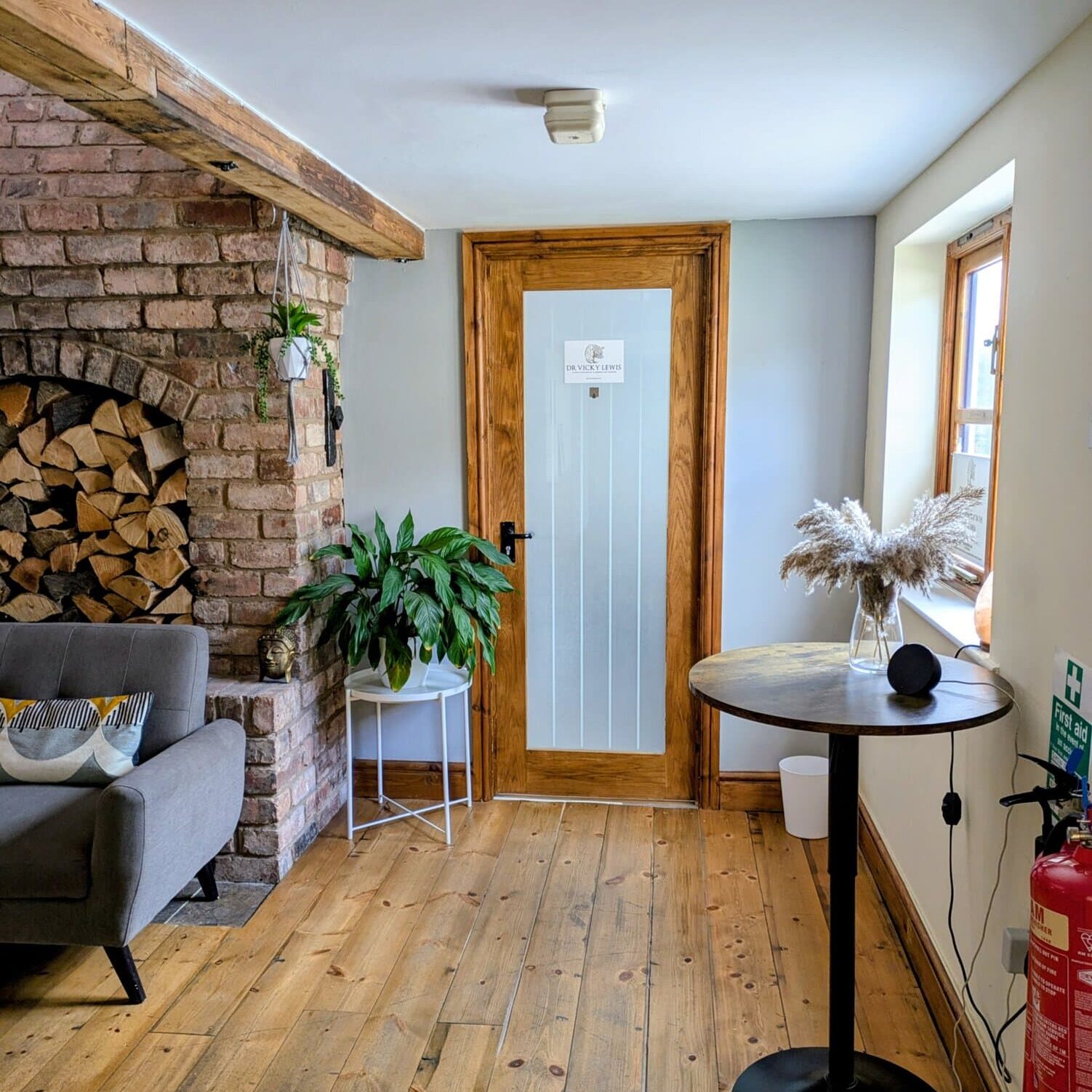
 The clinic is in Earlswood, Solihull and the therapy room is within a relaxed and calming farmhouse building, 5 minutes walk from Earlswood Lakes. Parking is free and the surroundings are tranquil and comforting. Tri Wellness is within Solihull and on the border of Warwickshire and easily accessible from the M40 and M42. Please feel free to browse our website and get in touch via the contact form below.

5.0
Based on 5 Reviews
google
Kate Bailey
February 16, 2023
google
Ophelia Turkson
November 28, 2022
google
Nik Davies
October 10, 2022
google
Patricia Clay
July 5, 2022
google
Rachel Wassall
June 28, 2022
Tri Wellness Entrance
Door into Therapy Room
Therapy Room 1
Earlswood_Lakes_2
youtube-video-thumbnail

We are passionate about working with integrity and honesty

What We Offer

Child and Young Person Therapy

Are you worried about the emotional wellbeing of your child and want to figure out how to make things better?

Finding it difficult to know how to support a young person who is struggling in school and are unsure what to do next?


Parenting Support and Advice

Does parenting feel challenging and exhausting and the approaches you are using are just not helping?

Do you want to learn more about building a positive connection with your child and how to keep calm when things are challenging?

Are you wondering if your child may be neurodivergent and want to know which parenting approaches are most helpful to support them?


Initial screening for Neurodivergence and Neuroaffirming Therapy

Are you or a family member considering whether to pursue an Autism or ADHD diagnosis and are looking for initial screening and advice?

Have you recently discovered you are neurodivergent and want help with navigating your journey?

Would you like to understand more about avoidance of demands, sensitivity to rejection and/or criticism and difficulties with executive functioning (planning, organising, time management, getting started on tasks, self regulating emotions etc.)?


 Adult Psychological Therapy

Are you struggling with feelings of stress, anxiety, low mood, overwhelm or burnout?

Do relationships feel difficult and you want to figure out why and what might help?


Support For Professionals

Are you looking for a safe space to offload, talk about your work, understand in more detail about difficulties, find potential solutions and develop your skills and knowledge?

Would you like to know more about how to support your staff or employees, help others to feel supported and valued, develop personally and professionally, experience less stress and reduce the risk of burnout?


Please get in touch by completing the contact form below

We always aim to work with compassion, respect and in collaboration with you

Testimonials

Vicky is an amazing therapist. She makes you feel at ease, listens intently and provides great advice to help with your mental wellbeing. Her kind and compassionate manner makes it easy to trust her and open up about any issues. She has Truly been a massive massive help with overcoming various issues with specific cognitive methods and solutions that I have used and will continue to use in day to day life. Vicky has worked with me and as a result my life has improved significantly. I am in a great place at the moment, but it is reassuring to know that if the time comes I can visit Vicky to solidify and improve on my mental wellbeing.

Vicky has been helpful, reassuring, understanding and easy to talk to, she is an easy person to feel comfortable with.

I would highly recommend Vicky as she is thoughtful, empathetic and easy to talk to. She also provided us with some very helpful practical suggestions.

I can strongly recommend Vicky's services. She is kind, patient and has great knowledge in her field. Her professional manner makes it easy to be open with her and helps to get the most out of the sessions.

Vicky is highly professional and creates an open, friendly non-judgemental environment. She is very approachable with a kind, gentle manner and genuinely cares. She is reliable and provides excellent resources tailored to your individual needs. I have found her very helpful and supportive at a very difficult time and I would highly recommend her to others.

Vicky has been helpful, reassuring, understanding and easy to talk to, she is an easy person to feel comfortable with.

Dr Vicky Lewis ran a virtual ‘Anxiety in children and at the workplace’ session for Jaguar Land Rover colleagues as part of the Working Parents Network. It was one of the best attended sessions (circa 200) we have had and resulted in excellent feedback from many colleagues. Dr Vicky was easy to work with and respected the sensitivity of the subject matter. Dr Vicky helped many people by going over many tools which she described in a really comprehendible manner. We cannot thank her enough

Vicky has been a huge support to my daughter who had developed a facial tic which we thought may have been linked to anxiety. My daughter was not sure what to expect with the sessions but Vicky was very kind and caring and my daughter soon opened up and talked through her worries. I saw a huge improvement after one session and Vicky provided some fantastic resources for us to practice relaxation and breathing techniques at home. The sessions have also helped with her self confidence and talking more openly on any worries or concerns she has. I would certainly recommend Vicky to others and will return in the future should we need any further support

We cannot thank Vicky enough for the help that she provided our son. He started suffering with health anxiety, to the point that it affected him every day. He started fortnightly sessions with Vicky, and the space and time that she gave him to talk through his worries, and to put mechanisms in place to cope, was invaluable. He is now managing his anxiety well, and is in a very happy place.

Vicky has been compassionate and professional from first contact and throughout. She is the first therapist that my daughter has felt really listened to her, so she was comfortable to talk and explore things. The outcome has been a better family relationship which is great - thank you Vicky!

We are so grateful to Vicky for the support she has given to our son, and to us too. Her knowledge of and empathy towards school avoidance and neurodivergence was amazing, and she was both reassuring and incredibly helpful in providing resources and practical techniques to help him. Thanks to Vicky we now feel more equipped, positive and confident for the future.

I contacted Vicky as I was desperate to feel better. Having always struggled with various aspects of life which counselling, antidepressants, HRT never resolved, I was diagnosed with ADHD at 53 years old. I was having extreme difficulty accepting my diagnosis and was at the point of giving up another really good job because my self esteem, confidence and ability to function had totally disappeared. Vicky has been amazing. Her knowledge, professional skills and non- judgmental / neuroaffirming approach have helped me understand how my diagnosis impacts me which in turn has helped me to accept who I am. My confidence and self esteem have returned and probably most importantly, I am kinder to myself. I absolutely recommend Vicky to anyone needing support.

How we can help

  • Psychological therapy for children, young people and adults

  • Evidenced based approaches personalised to you - not a 'one size fits all' approach

  • A neuroaffirming service which embraces and respects the incredible diversity of neurotypes

  • Initial Screening for possible traits of Autism, ADHD or AuDHD

  • Parenting support which prioritises your mental health, connection and the emotional wellbeing needs of your child

  • Clinical supervision, consultancy and training for professionals

April is Stress Awareness Month, a time to recognise the impact of stress on our health and wellbeing. 

To reduce stress, it's important to:

Adopt healthy habits like regular walking/exercise

Prioritise sleep 

Practice self-care

Spend time in nature

Do not be afraid to say "no" and put yourself first

Implement time management techniques

Use relaxation practices, such as deep breathing or meditation

Spend time with people who make you feel good, doing things that you enjoy.

#stress
#stressawareness
April is World Autism Acceptance Month and this is an opportunity for everyone to come together and raise awareness, acceptance, and create a society where autistics are supported and understood.

For many years, being autistic has been misunderstood.

Unfortunately, the way we assess for Autism and other neurodevelopmental conditions is still very deficit based.

Autistics are individuals with so many strengths, passions, and ways of connecting with the world.

Autism is made up of many different traits and needs, which show up in unique combinations.

Today, we've decided to tackle a common myth about autistics.

It can be wrongly presumed that autistics lack empathy. 

However, some of the reasons why some autistics can find it difficult to intuitively know what is going on for someone else, may be related to finding it difficult to interpret, identify and describe what is going on with their own emotions. 

This is known as Alexythmia.

Alexithymia is a processing difference to do with identifying, understanding and describing emotions and something that can be improved with the right help and support.

It is not a lack of emotion but a difference in emotional awareness; feelings are real but hard to name.

Not everyone feels emotions in words, some people feel them in their body, in energy, in patterns or in quiet.

Differences may include:

Putting feelings into words feeling hard.Identifying feelings in the moment feeling hardNot finding it easy to tell the difference between different emotions.Explaining emotions to others feeling difficult.

The above could result in saying "I don't know " when asked about feelings, difficulties when trying to explain reacting in a certain way, overwhelm and explosive reactions.  

It is not about a choice or behaviour, it is about not having the map to navigate what is happening inside.

#worldautismacceptancemonth#empathy #alexithymia #neurodivergence #autistic #audhd #adhder #autism #adhd #neurodiversity #mentalhealthawareness #mentalhealthmatters #mentalhealthrecovery#endthestigma #mindfulness #personalgrowth #selfcarematters #anxietyawareness #emotionalwellbeing #itsokaytonotbeokay #wellbeing #solihull
The term "on the spectrum" is considered unhelpful by many autistics and experts and is increasingly discouraged.

Reasons:

It Acts as a Euphemism: Many autistic people find the phrase infantilising or condescending, rather than a neutral description.

Misinterpretation of "Spectrum": The phrase is frequently used to imply a linear scale from "not at all autistic" to "severely autistic". In reality, the spectrum represents a "constellation" of different traits and support needs, not a straight line.

It Invalidates Struggles ("Everyone's a little bit..."): The statement "we are all on the spectrum" is considered unhelpful and often false. It minimises the real, daily challenges that individuals face.

It Dismisses the Need for Support: When people say someone is "only slightly on the spectrum," it is often used to deny them necessary support, services, or accommodations.

Vagueness: Saying someone is "on the spectrum" tells you very little about their actual skills, abilities, or support needs, whereas "autistic" is clear and direct.

Autism is a complex, multi-faceted neurodevelopmental difference, where individuals have unique combinations of strengths and challenges across many different areas.

Language shapes how we see people. 

It shapes how people respond, how systems are built and how people see themselves. 

When language refers to disorders, deficits or "fixing", it can result in shame and misunderstanding. 

We need to move towards increasing compassion, safety and understanding.

#language #neurodivergence #autistic #audhd #adhder #autism #adhd #neurodiversity #dyslexia #dyslexics #mentalhealthawareness #mentalhealthmatters #mentalhealthrecovery#endthestigma #mindfulness #anxietyawareness #emotionalwellbeing #itsokaytonotbeokay #solihull #warwickshire
Do you ever find yourself caught in the grip of perfectionism and feel terrified of making a mistake or falling short? 

Believe me, you're not alone.

Perfectionism is a personality trait characterised by a relentless striving for flawlessness, unattainable high standards, and critical self-evaluation, often driven by fear of failure.

It's the tendency to demand of others or of oneself an extremely high or even flawless level of performance – above and beyond what is required.

Often it's not just about high standards, in fact it might feel like survival and is utterly exhausting.

Perfectionism can be an overcompensation for past life events and for feeling “not good enough.” 

Many people, especially individuals who are neurodivergent feel the weight of perfectionism.

In Autistics, perfectionism can be tied to identity, high personal standards, and pressure to fit in socially or professionally.

In ADHDers and dyslexics, perfectionism can stem from difficult school experiences where traits may have been shamed, misunderstood or even punished by those who did not recognise or understand them - which is misinformed and heartbreaking.

While perfectionism can build strong skills, attention to detail, and impressive work quality, it also creates stress, procrastination, burnout, and self-criticism.

The emotional toll of perfectionism is significant.

Practical strategies, like self-compassion, mindfulness, breaking tasks into small steps, and focusing on progress may help to reduce the pressure that can come with perfectionism. 

Letting go of perfectionism does not mean eliminating worries around mistakes, failure, and judgment, but rather accepting that they are part of life — and one that can help us grow.

#perfectionism #neurodivergence #autistic #audhd #adhder #autism #adhd #neurodiversity #dyslexia #dyslexics #mentalhealthawareness #mentalhealthmatters #mentalhealthrecovery#endthestigma #mindfulness #anxietyawareness #emotionalwellbeing #itsokaytonotbeokay #solihull #warwickshire
Misophonia

This Neurodiversity Celebration week, let's think about Misophonia.

Did you know that...

Misophonia is a sensory experience that can trigger the nervous system into 'fight or flight' mode.

It is a neurological sensitivity where some everyday sounds can trigger significant distress.

It is not just about the sounds being irritating, it is more extreme in that the brain processes certain sounds as a threat.

Whilst this can be difficult for others to understand, it is definitely not about overreacting and it is not intentional.

The nervous system reacts as if the body is under threat. Sounds include things such as:

Chewing
Swallowing
Breathing
Sniffing
Tapping

Stimuli associated with these sounds are experienced as both unpleasant and distressing and evoke a strong negative emotional, psychological and behavioural response.

Whilst Misophonia can affect anyone, the heightened sensory sensitivity and differences in auditory processing within Autistics and ADHDers can lead to higher rates of this unpleasant sound sensitivity.

#neurodiversitycelebrationweek #misophonia#neurodivergence #autistic #audhd #adhder #autism #adhd #neurodiversity #mentalhealthawareness #mentalhealthmatters #mentalhealthrecovery#endthestigma #mindfulness #personalgrowth #selfcarematters #anxietyawareness #emotionalwellbeing #itsokaytonotbeokay #wellbeing #solihull #warwickshire
Celebrating Different Minds: 

Neurodiversity is an umbrella term that refers to the natural variation in the human brain and its functions.

It acknowledges that every brain is unique and that these differences are not deficits but simply alternative ways of processing information, thinking, and interacting with the world.

Although the medical model is deeply rooted in our culture, the basic idea of neurodiversity does not agree with a medical, diagnostic model because differences do not need to be thought of as disorders.

Humans are all different and there is infinite variation in the neurological differences in all individuals.

Approximately 15-20% of population has a neurological difference. Instead of labelling people with deficits or disorders, when we use the term neurodiversity, we take a balanced view of an individual’s unique strengths and challenges. Many challenges neurodivergent people face are more to do with the environment and systems they are placed in, often designed by a majority population.

Important things to remember:

No two people are the same and so we will all have different profiles

Although we talk about specific neurodifferences such as being Autistic or an ADHD, the reality is that these can co-occur

Every neurodivergent individual has a unique pattern of strengths and challenges

We tend to operate on an approach to diagnosis and labels which can mean that quite often the focus is on the challenges rather than the many strengths and talents of neurodivergent individuals

It is important that we take a person-centred approach, by tailoring strategies to each individual

It is important to harness the strengths and talents of neurodivergent individuals, this helps to build confidence and self-esteem, and ensures individuals are given the opportunity to flourish in their day-to-day.

#neurodiversitycelebrationweek#neurodivergence #autistic #audhd #adhder #autism #adhd #neurodiversity #mentalhealthawareness #mentalhealthmatters #mentalhealthrecovery#endthestigma #mindfulness #personalgrowth #selfcarematters #anxietyawareness #emotionalwellbeing #itsokaytonotbeokay #wellbeing #solihull #warwickshire
Executive functions are a set of brain skills that we use to process information and help with:

Planning
Organising 
Attention and remembering
Managing emotions
Controlling impulses in everyday life

Executive function skills help us to facilitate the achievement of goals.

Executive function can be affected by several things including stress, overwhelm, anxiety, not enough sleep, thirst and hunger, emotions and neurodivergence.

These factors might create challenges with: organisation, planning ahead, prioritising, getting started, remembering instructions and details, keeping track of time, paying attention, shifting focus, problem solving, completing tasks and managing emotions.

Challenges are nothing to do with a lack of effort or motivation.

Executive function is a performance skill not a knowledge skill. Differences are part of a unique brain wiring. 

Difficulties are due to a 'glitch' in the system and are not related to a personal flaw or laziness. 

#executivefunctions #executivefunctioning  #neurodivergence #autistic #audhd #adhder #autism #adhd #neurodiversity #mentalhealthawareness #mentalhealthmatters #mentalhealthrecovery#endthestigma #mindfulness #personalgrowth #selfcarematters #anxietyawareness #emotionalwellbeing #itsokaytonotbeokay #wellbeing #solihull #warwickshire
Things that could be signs of AuDHD:

Craving routine but getting bored easily

Loving deep focus but burning out fast

Needing quiet time but feeling restless inside

Wanting structure but struggling to stick to it

Being sensitive to noise, labels and tone of voice

Clinically, many people meet the criteria for both Autism Spectrum Disorder and Attention-Deficit Hyperactivity Disorder (official diagnostic terminology).

Research now shows this co-occurrence is common, not rare, some researchers found the co-occurence to be 80%.

This is not widely known and can often leave people confused following assessment if a single diagnosis does not seem to fit for them based on their own experiences.

For more information about AuDHD see https://www.drvickylewis.co.uk/neurodivergence/

#neurodivergence #autistic #audhd #adhder #autism #adhd #neurodiversity #mentalhealthawareness #mentalhealthmatters #mentalhealthrecovery #endthestigma #mindfulness #personalgrowth #selfcarematters #anxietyawareness #emotionalwellbeing #itsokaytonotbeokay #wellbeing #solihull #warwickshire
No! Everyone is not a little bit ADHD/Autistic.

Terms like this may trivialise the experience for autistics and ADHDers. 

Language shapes how we see people. It shapes how people respond, how systems are built and how people see themselves. 

When language refers to disorders, deficits or "fixing", it can result in shame and misunderstanding. 

We need to move towards increasing compassion, safety and understanding.

Autism is widely recognised as a lifelong, neurodevelopmental difference meaning that it is a permanent difference in how the brain works, affecting communication, social interaction, executive function and sensory experiences.

It is not helpful to refer to Autism or ADHD as a ‘disorder’ or a ‘disability’ and the use of neuro affirming language is really important.

Many autistics see autism as part of who they are, rather than something separate, and prefer to be described as autistic.

Similarly, many individuals with ADHD may prefer to be described as ADHDers.

When terms like "isn't everyone a little bit ADHD/Autistic" are used - it dismisses the reality of what it can really be like and the challenges individual's experience and face.

#neurodivergence #autistic #audhd #adhder #autism #adhd #neurodiversity #neuroaffirming #mentalhealthawareness #mentalhealthmatters #mentalhealthrecovery#endthestigma #mindfulness #personalgrowth #selfcarematters #anxietyawareness #emotionalwellbeing #itsokaytonotbeokay #wellbeing #solihull #warwickshire
Decision paralysis is a form of cognitive overload that can result in anxiety, avoidance of tasks and even burnout.

It might look like:

Analysis Paralysis: Getting stuck in a loop of overanalysing, often triggered by having too many choices.

Task Paralysis: The inability to start a task due to fear of failure, perfectionism, or not knowing where to begin.

Emotional Component: fear and anxiety.

What might help:

Limit Options: Reduce choices to the absolute minimum to avoid overwhelming the brain.

Set Decision Filters: Focus on the top 2-3 most important factors (e.g., budget, time) to narrow down choices quickly.

Embrace Imperfectionism: Accept that a "good enough" decision made now is better than a perfect decision that is never made.

Set Deadlines: Use the "24-hour rule" to prevent impulsive, over-thought decisions, or set smaller, urgent deadlines for minor tasks.

Reduce Stimulation: Quiet the environment, as sensory overload can exacerbate the inability to focus on choices.

Decision paralysis can be common in Autistics and ADHDers and last for minutes, hours, or, in extreme cases, evenlonger. 

By recognising it as a symptom of executive dysfunction rather than a personality flaw, it might make it feel a bit easier to implement strategies. 

#decisionparalysis #neurodivergence #autistic #audhd #adhder #autism #adhd #neurodiversity #mentalhealthawareness #mentalhealthmatters #mentalhealthrecovery#endthestigma #mindfulness #personalgrowth #selfcarematters #anxietyawareness #emotionalwellbeing #itsokaytonotbeokay #wellbeing #solihull #warwickshire
If you constantly over-explain yourself, you're not alone.

Over - explaining means giving more information than most people usually expect during a conversation. 

Potential reasons for over-explaining include detail-focused thinking, social cues not being clear, a need for transparency, and adherence to honesty and rules.

What underlies over - explaining is often a need for safety, clarity and to feel understood.

Over explaining might look like:

Providing lots of context, detail or justifications
Over apologising for needs and preferences
Clarifying and re-clarifying
Anticipating potential criticism and working hard to pre-empt this
Replaying conversations in your head later and ruminating about what you could have said or done differently.

If you are autistic and find yourself over - explaining or see this in someone you care about, it might be helpful to know that:

Monotropism & High-Detail Focus: Autistic brains often process information by focusing on minute details and building up to the big picture. This analytical, bottom-up processing means every detail feels necessary for accuracy.

The Double Empathy Problem: Difficulties in communication are mutual. Over-explaining may be an attempt to bridge the gap when non-verbal or implicit communication cues may not be clear.

Safety & Reducing Misunderstanding: Due to a lifetime of being misunderstood or feeling criticised for being e.g. "too blunt or direct" over - explaining could be a way of trying to ensure intentions are clear and to avoid potential conflict.

Trauma Response (Fawning): Over-explaining can be a "fawn" response—an attempt to appease others and avoid rejection.

Masking/Conformity: It can be a way to try to "manage" the perceptions of others, attempting to make communication come across in a way that's different to what might feel natural.

Instead of aiming for "normal" communication, the goal is mutual understanding and creating a space where people do not feel forced to mask or apologise for a natural way of processing information.

#overexplaining #autism #doubleempathyproblem #monotropism #masking #conformity #neurodiversity #mentalhealthawareness #mentalhealthmatters #ment
More than 1.25 million people in the UK struggle with eating conditions, many in secret. 

They are of all ages, genders and backgrounds. 

We truly empathise with anyone going through this.

This eating disorders awareness week, we would like to take the opportunity to raise awareness about Avoidant/Restrictive Food Intake Disorder (ARFID) which can be common in individuals who are Neurodivergent.

Individuals with ARFID limit the volume and/or variety of foods they consume, but unlike the other eating disorders, food avoidance or restriction is not related to fears of fatness or distress about body shape, size or weight.

Instead, in ARFID, selective eating is motivated by a lack of interest in eating or food, sensory sensitivity (e.g., strong reactions to taste, texture, smell of foods), and/or a fear of aversive consequences (e.g., of choking or vomiting).

Though ARFID most commonly develops during infancy or early childhood, it can persist into adulthood or develop at any age.

Although many children go through phases of picky or selective eating, an individual with ARFID has a diet that is so limited that it can lead to medical, nutritional, and/or psychosocial difficulties.

This may mean weight loss, stalled growth, significant nutritional deficiencies and a significant impact on mental health, relationships, social life, school and work.

#eatingdisordersawarenessweek2026 #ARFID #restrictiveeating #eatingdifficulties #eatingdisorders #neurodivergence #autistic #audhd #adhder #autism #adhd #neurodiversity #mentalhealthawareness #mentalhealthmatters #mentalhealthrecovery#endthestigma #mindfulness #personalgrowth #selfcarematters #anxietyawareness #emotionalwellbeing #itsokaytonotbeokay #wellbeing #solihull #warwickshire
#mentalhealthmatters❤️ 
#selfcare❤️ 
#solihull 
#solihullmums 
#solihullmumsanddads 
#ɴᴀᴛᴜʀᴇʟᴏᴠᴇʀs 
#warwickshire 
#lakes 
#ɴᴀᴛᴜʀᴇᴘʜᴏᴛᴏɢʀᴀᴘʜʏ 
#sunrays 
#emotionalwellbeing 
#anxietyrelief 
#depressionawareness 
#neurodivergent 
#neurodiversity 
#adhdawareness 
#autistic
ADHD inertia—often referred to as task paralysis—is a neurobiological, non-lazy state where an individual struggles to start, stop, or switch tasks, feeling stuck and overwhelmed. 

A neuro-affirming approach understands this not as a deficit or character flaw, but as a result of dopamine regulation issues and executive dysfunction. 

It involves validating this experience and using strategies that work with the brain rather than fighting it. 

Task paralysis might look like:

The "Stuck" Feeling: ADHD inertia can be a painful inability to move from one state to another (e.g., getting out of bed, stopping a hyperfocus activity to start work).

Not Laziness: It is a physiological and psychological barrier, where the brain’s "initiation network" is experiencing a glitch.

Dopamine Impact: Because ADHD brains have lower dopamine levels, they often struggle to initiate tasks that don't offer immediate rewards.

Autistic Overlap: Often linked with "autistic inertia" or monotropism (a deep, narrow focus), making it hard to shift attention. 

Strategies that might help:

Reduce Friction: Make the start of a task as effortless as possible (e.g. set out materials the night before).

The "Smallest Possible Step": Break tasks into tiny, manageable actions, such as "opening the document" rather than "writing the report".

Body Doubling: Work alongside someone else to help initiate and maintain focus.

Dopamine Menu: Create a list of activities that spark joy or satisfaction to boost motivation before starting a harder task.

Time-Boxing (10-3 Rule): Work for a very short period, such as 10 minutes, followed by a 3-minute break to make initiation less daunting.

Self-Compassion: Acknowledge that this is a neurological challenge and not a personal failure.

For more information about Neurodivergence see https://www.drvickylewis.co.uk/neurodivergence/

#taskparalysis #ADHDintertia #neurodivergence #autistic #audhd #adhder #autism #adhd #neurodiversity #mentalhealthawareness #mentalhealthmatters #mentalhealthrecovery#endthestigma #mindfulness #personalgrowth #selfcarematters #anxietyawareness #emotionalwellbeing #itsokaytonotbeokay #wellbeing #solihull #warwickshire
#mentalhealthmatters❤️ 
#selfcare❤️ 
#solihull 
#solihullmums 
#solihullmumsanddads 
#ɴᴀᴛᴜʀᴇʟᴏᴠᴇʀs 
#warwickshire 
#lakes 
#ɴᴀᴛᴜʀᴇᴘʜᴏᴛᴏɢʀᴀᴘʜʏ 
#swans 
#emotionalwellbeing 
#anxietyrelief 
#depressionawareness 
#neurodivergent 
#neurodiversity 
#adhdawareness 
#autistic
Autistic inertia is a profound difficulty starting, stopping, or switching tasks due to nervous system regulation issues and executive dysfunction. 

It is a natural, involuntary "stuck" state and nothing to do with laziness. 

Neuroaffirming support involves working with this momentum—using body doubling (working alongside someone else), reducing demands, visual aids, and respecting "flow states"—rather than fighting it. 

Autistic Inertia might look like:

Difficulty Starting: Trouble initiating tasks even when motivated, often feeling "frozen".

Difficulty Stopping: Becoming hyperfocused and unable to shift away, losing track of time.

Monotropism: Rooted in a tendency to focus intensely on one thing, making shifts require significant energy.

Executive Dysfunction: Challenges in planning, organising, or breaking down steps. 

Strategies that might help:

Break Down Tasks: Divide large, overwhelming tasks into tiny, manageable steps.

Use Visuals & Prompts: Use visual schedules, checklists, and alarms to signal transitions.

Build in Buffers: Allow 2–10 minutes for transition time between tasks, rather than jumping instantly from one thing to another.

Utilise "Bridge Tasks": Create a small, intermediate activity that helps transition from one major activity to the next.

Leverage Hyperfocus: If possible, link new tasks to current, intense interests to make starting easier. 

For more information about Neurodivergence see https://www.drvickylewis.co.uk/neurodivergence/

#autisticinertia #neurodivergence #autistic #audhd #adhder #autism #adhd #neurodiversity #mentalhealthawareness #mentalhealthmatters #mentalhealthrecovery#endthestigma #mindfulness #personalgrowth #selfcarematters #anxietyawareness #emotionalwellbeing #itsokaytonotbeokay #wellbeing #solihull #warwickshire
Justice Sensitivity

Justice sensitivity is the tendency of an individual to perceive and react strongly to situations they consider unjust or unfair and it becomes difficult to let go of.

It reflects how frequently a person notices injustice and the intensity of their emotional, cognitive, and behavioural responses.

Justice sensitivity can be common in autistics and ADHDers due to being attuned to issues of fairness. It can result in heightened emotional reactions, such as anger, frustration, or anxiety, in relation to situations when there has been unfair treatment.

It can be experienced as a physical, visceral reaction to a situation that seems unfair even when there is no direct involvement in what's happened.

People who are justice sensitive tend to notice injustice more often than others, they tend to ruminate longer and more intensely on that injustice, and they feel a stronger need to restore justice.

Research studies have found that ADHDers (particularly the inattentive type) are much more likely to be justice-sensitive. In fact, researchers found that ADHDers feel such a strong need to restore justice that they may get involved and take action even when there is a risk of creating problems for themselves.

While justice sensitivity can lead to conflict, it also provides a foundation for leadership, advocacy, and creating change.

For more information about neurodivergence see https://www.drvickylewis.co.uk/neurodivergence/

#justicesensitivity #neurodivergence #autistic #audhd #adhder #autism #adhd #neurodiversity #mentalhealthawareness #mentalhealthmatters #mentalhealthrecovery#endthestigma #mindfulness #personalgrowth #selfcarematters #anxietyawareness #emotionalwellbeing #itsokaytonotbeokay #wellbeing #solihull #warwickshire
Remind yourself....

Feelings are like waves

Breathe out for longer than when you take breath in

There will be light at the end of the tunnel

Relieve as much pressure as you can

Choose comfort over productivity

You've got through difficult times before

Be gentle and kind with yourself

This will pass...

#mentalhealthawareness❤️ 
#selfcare❤️ 
#lakes 
#naturelovers 
#naturephotography📷 
#sunsetvibes 
#emotionalwellbeing 
#childrensmentalhealthweek 
#parentingtips 
#neurodivergence 
#neurodiversity 
#youareenough 
#solihull 
#warwickshire 
#counselling 
#talkingtherapy
1 in 5 children experience mental health difficulties.

Half of difficulties develop by the age of 14.

420000 children and young people are receiving help for their mental health every month.

Children and young people who are struggling with mental health can go an average of 10 years between the difficulties starting and getting help - Source: Place2Be website.

You can help your child to express their emotions by labelling emotions so that they know what they are, e.g. "You look happy today".

Modelling
E.g. "I am sad that we cannot go out today".

Mirror activities
Make faces for the different emotions in the mirror.

Use drawing and books.

Reassure your child that ALL emotions are valid and ok even the ones that feel more difficult to manage.

It's ok to cry
It's ok to be angry
It's ok to be sad 

#childrensmentalhealthweek #childrensmentalhealth #teenagementalhealth #mentalhealthmatters❤️ #emotionalexpression #itsoktocry #itsoktobeangry #itsoktobesad #neurodivergence #neurodiversity #neuroaffirming #adhd #autismacceptance #audhd #wellbeing #mentalhealth #solihull #warwickshire
Clinically, many people meet the criteria for both Autism Spectrum Disorder and Attention-Deficit Hyperactivity Disorder (official diagnostic terminology). 

Research now shows this co-occurrence is common, not rare. 

In fact, some research found that 80% of Autistics are also ADHDers. 

Despite rates being so high, this degree of overlap is not widely known.

Research before 2013 only studied autism and ADHD in isolation. 

Therefore, those who were assessed prior to the year 2013 who met the criteria for one diagnosis, may discover that they actually fit the diagnostic criteria for both. 

The term AuDHD arose from autistic and ADHD communities as a way to name that shared experience.

While not an official DSM diagnosis, AuDHD captures how these two neurotypes interact to create a distinct profile of strengths, sensory patterns, and executive-function needs. 

Instead of viewing it as a “double difficulty,” a neurodiversity-affirming approach recognises AuDHD as a valid neurological difference that requires understanding and accommodation, not correction.

Because Autism and ADHD can overlap and even mask one another, many AuDHD individuals go undiagnosed or may not have a full understanding of what they are experiencing. 

#neurodivergence #autistic #audhd #adhder #autism #adhd #neurodiversity #mentalhealthawareness #mentalhealthmatters #mentalhealthrecovery #endthestigma #mindfulness #personalgrowth #selfcarematters #anxietyawareness #emotionalwellbeing #itsokaytonotbeokay #wellbeing #solihull #warwickshire
There are numerous benefits of walking.

Even when life feels hectic and busy, see if you can prioritise yourself and make a commitment to regular short walks to look after your mental health.

#mentalhealthmatters💚 
#selfcare❤️ 
#emotionalwellbeing 
#anxietyrelief 
#depression 
#selfesteem 
#lowmood 
#neurodivergence 
#neurodiversity 
#solihull
#warwickshire
#naturelovers 
#naturephotography📷 
#snowday 
#walking
Monotropism

Monotropism is a neuro-affirming concept that explains traits of Autism and ADHD as a different way of processing, rather than a deficit.

It's a theory which explains how Autistics and ADHDers tend to focus their attention intensely on a small number of interests or tasks at once, creating a deep "attention tunnel" that blocks out distractions. 

This intense focus leads to deep expertise, flow states, and joy but can make task-switching, multitasking, and coping with interruptions difficult.

Attention is concentrated deeply on one or a few things, processing them in rich detail while other things outside the tunnel are not attended to. 

Benefits: Can lead to high levels of skill, creativity, calm, and happiness within a special interest.

Challenges: Can lead to difficulties with executive function, sensory overload, social communication nuances, and monotropic split which refers to overwhelm from sudden shifts in attention. 

#monotropism #neurodivergence #autistic #audhd #adhder #autism #adhd #neurodiversity #mentalhealthawareness #mentalhealthmatters #mentalhealthrecovery #endthestigma #mindfulness #personalgrowth #selfcarematters #anxietyawareness #emotionalwellbeing #itsokaytonotbeokay #wellbeing #solihull #warwickshire
💛Hyper Empathy describes a heightened emotional sensitivity to deeply feeling the emotions of others. 

It can often be an intense, overwhelming experience of sensing the emotions, pain or stress of others. 

Whilst this can be a strength for deep connection, knowing how someone is feeling without them telling you and a great skill for understanding the hierarchy and dynamics or a group of people without being informed of them, it can also lead to overwhelm and burnout.

Hyper-empathy can be common in autistics and ADHDers.

Key Characteristics 

👉Emotional Absorption: Individuals may absorb the tension in a room, taking on others' emotions as if they were their own.

👉Physical Pain/Sensitivity: Witnessing distress can cause genuine physical pain or intense, long-lasting emotional reactions in the observer.

👉Delayed Processing: Some may experience a delay, where the emotional impact hits hours or days later.

👉Object Empathy: A strong, empathetic connection to animals, nature, or even inanimate objects.

👉"Fixer" Mentality: A need to fix, please, or care for others, often leading to neglecting one's own needs. 

#hyperempathy #autism #autistic #autismstrengths #ADHD#ADHDer #neurodiversity #neurodivergence #neuroaffirming#mentalhealthawareness #mentalhealthmatters❤️#mentalhealthrecovery #emotionalwellbeing#itsokaytonotbeokay #wellbeing #solihull #warwickshire
Stimming (self-stimulatory behavior):

Usually involves repetitive movements, sounds, or actions
Is not always obvious, can be subtle
Necessary for helping to regulate the nervous system
Can be common in Autistics and ADHDers
Is not a problem behaviour

It can help with:
Regulating sensory input
Trying to focus, concentrate and resist distraction
Coping with difficult feelings like anxiety
Expressing joy
Reducing stress and managing overwhelm

Might look like:
Blinking
Nail biting
Chewing objects
Lip biting
Finger tapping or drumming
Skin picking
Fidgeting with small objects, e.g. pen clicking 
Big body movements such as rocking, jumping, spinning
Etc.

Stimming is natural, necessary, and a helpful coping mechanism rather than something to be suppressed. 

#stimming #selfstimulatorybehavior #neurodivergent #neurodiversity #autism #adhdawareness #mentalhealthawareness #mentalhealthmatters #mentalhealthrecovery #endthestigma #mindfulness #personalgrowth #selfcarematters #anxietyawareness #emotionalwellbeing #itsokaytonotbeokay #wellbeing #solihull #warwickshire
Remember:

😕This is often one of the hardest months of the year

😕Less light than usual

😕Less sun

😕Cold temperatures

😕Tired nervous systems

🙂Rest is allowed

🙂Be kind to yourself

🙂There's no need to push yourself

🌟You're ok just as you are ❤️

#mentalhealthmatters❤️ 
#selfcare❤️ 
#solihull 
#solihullmums 
#solihullmumsanddads 
#naturelovers 
#january 
#warwickshire 
#lakes 
#naturephotography 
#swans
#emotionalwellbeing 
#anxietyrelief 
#depressionawareness 
#neurodivergent 
#neurodiversity 
#adhdawareness 
#autistic
PDA

Pathological Demand Avoidance (PDA) or as we prefer to think of it - a Pervasive Desire for Autonomy - refers to a specific profile within Autism and can also occur in ADHDers.

It describes how individuals usually exhibit a strong desire for independence and have an increased sensitivity towards demands that challenge their autonomy.

This profile can be complex, challenging and misunderstood.

Essentially it is characterised by high levels of anxiety and the need to avoid demands, to remain in control. 

Everyone experiences ‘demand avoidance’ from time to time i.e. think of how often you've put off something you aren't keen to do, but PDA is more extreme.

A PDAer might avoid a request from others e.g. tidy up, meet me at 10am

OR

Avoid an internal request like hunger or needing to use the toilet 

OR 

Avoid something they want to do and usually enjoy e.g. a hobby, going for a walk, etc. because the demand itself causes high levels of anxiety.

#pda #pathologicaldemandavoidance #mentalhealthawareness #mentalhealthmatters #mentalhealthrecovery #endthestigma #mindfulness #personalgrowth #selfcarematters #anxietyawareness #emotionalwellbeing #itsokaytonotbeokay #wellbeing #solihull #warwickshire
Alexithymia

Did you know? not everyone feels emotions in words.

Some people feel them in their body, in energy, in patterns or in quiet.

Alexithymia is a processing difference to do with identifying, understanding and describing emotions and something that can be improved with the right help and support.

It is not a lack of emotion but a difference in emotional awareness.

It's when feelings are real but hard to name and this can be common in individuals who are Neurodivergent.

Differences may include:
Putting feelings into words feeling hard
Identifying feelings in the moment being hard
It not being easy to tell the difference between different emotions
Explaining emotions to others feeling difficult

#solihull #warwickshire #mentalhealthmatters❤️ #emotionalwellbeing #anxietyrelief #depressionawareness #neurodiversity #neurodivergence #autistic #adhdawareness #audhd#solihullmums #solihullmumsanddads
While everyone uses mild forms of masking (e.g., acting professionally in interviews), intense, extended periods of masking for neurodivergence is exhausting and can lead to burnout, identity confusion, and impact mental health.

🌟What masking looks like

Mimicking behaviors: e.g. copying how others talk, using similar facial expressions, gestures etc.

Suppressing stimming: e.g. hiding repetitive movements which usually help you to self regulate

Forcing eye contact: even when it feels unnatural or uncomfortable

Using scripts: e.g. pre planning and rehearsing conversations

Hiding true feelings: e.g. pretending to laugh or be enjoying yourself

Faking interests: or hiding your true interests in order to 'fit in' and feel accepted

🌟What might help

Although unmasking is not a straightforward or easy thing to do here are some ideas that might help:

Allowing plenty of time to recover after social interactions

Using ‘energy accounting’ (working out what drains and what recharges your energy) or ‘spoon theory’ (where you imagine the amount of energy you have each day as a number of spoonfuls and decide what you can spend those ‘spoons’ on before you run out)

Spending time with people you really connect well with, who may seem similar and you can share relatable experiences with

Allocating time to reflecting about who you are behind the mask, what you like and dislike, and how and when you might feel safe enough to unmask

Think about what reflects your true interests, values, sensory profile and identity – maybe in therapy, by journaling, meditating or in discussion with those who care about you/and know you well

Discussing masking with a professional to talk things through and help you identify the nature of your masking and what might help with your emotional wellbeing and learning to value your true self.

#masking #neurodivergence #neurodiversity #autistic #adhdawareness #audhd #mentalhealthawareness #mentalhealthmatters #mentalhealthrecovery #endthestigma #mindfulness #personalgrowth #selfcarematters #anxietyawareness #emotionalwellbeing #itsokaytonotbeokay #wellbeing #solihull #warwickshire
Autism is made up of many different traits and needs, which show up in unique combinations.

Autistics are individuals with so many strengths, passions, and ways of connecting with the world.

Strengths often include:

🌟Passionate interests and deep focus

🌟Creative problem-solving abilities

🌟High sensitivity to patterns, textures, and emotions

🌟Incredible memory and attention to detail

🌟Honesty, loyalty, and values-driven thinking

🌟PDAers are often charismatic, humorous and engaging - PDA is a profile within Autism, we will be posting more information about this soon.

For further information see: https://www.drvickylewis.co.uk/neurodivergence/
It’s important to remember that a thought isn’t necessarily a fact, or based on reality. You might believe the unhelpful thoughts that pop into your mind, but it’s actually important to question them. 

Ask yourself what is the evidence for and against the thought(s).

Question if you're in the trap of an unhelpful thinking habit - see https://www.getselfhelp.co.uk/docs/unhelpfulthinkinghabitswithalternatives.pdf

Think about what you would say to a friend in a similar situation.

Consider if there is an alternative way of looking at things.

Anxiety can cause people to spend a lot of time worrying, but worry is often only useful when it reminds you to do something – otherwise it’s just your thoughts getting stuck in an unhelpful loop.

Try allocating a daily worry time.

Consider mindfulness or breathing exercises to try to help your mind to feel calmer.

You can use the 5,4,3,2,1 method to ground yourself by focussing on:

5 things you can see 4 things you can feel 3 things you can hear 2 things you can smell 1 thing you can taste

People often get into the habit of avoiding situations that make them feel anxious. This can, unfortunately, keep the anxiety going. Try to consider whether there are any things you are avoiding that you might be able to consider facing with support. 

Be kind to yourself and try as hard as possible to be self compassionate - now is not a time to be criticising yourself.

Source: NHS inform anxiety self help.

#anxiety #mentalhealthawareness #mentalhealthmatters #mentalhealthrecovery #endthestigma #mindfulness #personalgrowth #selfcarematters #anxietyawareness #emotionalwellbeing #itsokaytonotbeokay #wellbeing #solihull #warwickshire
#warwickshire 
#solihull
#earlswoodlakes 
#selfcare❤️ 
#mentalhealthmatters💚 
#selfcompassion 
#therapistsofinstgram 
#counselling 
#psychologist 
#2026❤️
Do you spend large periods of the day worrying?

Do you feel nervous, apprehensive or on edge?

Do you often experience unpleasant physical sensations like “butterflies” in your stomach, tense muscles, dizziness or breathlessness?

Do you find it hard to relax and “switch off”?

Anxiety is an unpleasant feeling that everyone experiences sometimes. 

General anxiety symptoms can last for extended periods of time – a couple of weeks or longer. It really is more than just being nervous.

You might have anxious thoughts about yourself, other people, and how you think other people feel about you. 

You might also have anxious thoughts about the world around you and what is coming in the future.

The things you think, feel, and do when you’re anxious can actually keep anxiety going.

When you’re anxious, you might worry all the time and feel like you can’t get it under control. 

It might make it difficult to relax or sleep. 

It can stop you from doing things you enjoy, or things you need to do like going to work.

Automatic thoughts are unhelpful thoughts that pop into your mind, without you making any effort to think of them. 

They’re believable and usually upsetting – this can affect your feelings and what you do.

It’s important to remember that a thought isn’t necessarily a fact, or based on reality. 

Check back here later this week for tips on what can help to manage anxiety.

Source: NHS inform anxiety self help.

#anxiety #stress #mentalhealthawareness #mentalhealthmatters #mentalhealthrecovery #endthestigma #mindfulness #personalgrowth #selfcarematters #anxietyawareness #emotionalwellbeing #itsokaytonotbeokay #wellbeing #solihull #warwickshire
Mental Health Reminders ❤️

❤️You do not need to prove anything in the first week of a New Year

❤️If you want to set a goal or make a change, ensure it's coming from a place of self compassion not an inner critic

❤️Take one step at a time and remove any pressure you may be putting on yourself 

❤️Remember your worth is not defined by a New Years Resolution and whether you meet a goal

#newyearsresolutions
#2026newyear❤️ 
#therapistsofinstagram
#mentalhealthmatters❤️
#emotionalhealing 
#solihullmums
#warwickshire
#sen
#neurodivergence
#counselling
#selfcare❤️
☃️Wishing everyone a very Merry Christmas!☃️

💚Sending peace and best wishes to those for whom Christmas can be a difficult time, you will be in our thoughts

Remember:

🎁It's ok to pause

🎁Allow yourself to express your feelings, whether joy, sadness, or stress

🎁Make time for movement

🎁It's ok to say "no" and set boundaries that suit you with family and friends

🎁You don't have to say "yes" just to avoid upsetting others 

🎁Sometimes less is more

🎁It's ok to miss those who are no longer with us and to grieve

🎁Making time for meditation can help centre your thoughts and reduce stress

🎁Speak kindly to yourself if you're going through a difficult time or upsetting memories from the past resurface 

🎁Spend time outside if possible

🎁Stay hydrated and try to prioritise rest and sleep 

🎁You absolutely deserve to put yourself first, even if this is only possible for brief periods of time, do it for yourself 

🎁Your mental health matters more than Christmas🌟

#christmastime 
#mentalhealthmatters❤️ 
#emotionalwellbeing 
#selfcare❤️
#sen
#neurodivergence #solihullmums 
#solihullmumsanddads 
#parentingtips 
#naturelovers 
#solihull 
#warwickshire 
#earlswoodlakes
Important reminders especially at this time of year:

🎄You can say "no" to invitations and plans.

🎄Spending time alone is ok.

🎄You do not have to feel merry/happy/joyful.

🎄All emotions are valid.

🎄Don't put pressure on yourself to overspend.

🎄You are allowed to spend the holidays however you want.

🎄It is ok to feel overwhelmed.

🎄There is no pressure to celebrate if this doesn't feel right for you.

🎄It's ok to leave events early.

🎄You can make your own choices, even if they don't fit with what someone else wants you to do.

🎄You are allowed to rest whenever you need it.

❤️It's your holiday too, if you have a tendency to put everyone else's needs before your own, be sure to carve out some time for yourself and meet your own needs too.

#youcansayno #christmasmentalhealth #parentingtips #solihullmums #neurodivergence #mentalhealthawareness #mentalhealthmatters #mentalhealthrecovery #endthestigma #mindfulness #personalgrowth #selfcarematters #anxietyawareness #emotionalwellbeing #itsokaytonotbeokay #wellbeing #solihull #warwickshire
🎄Meltdowns after school
Think about the 'coke bottle' effect, gradually being shaken throughout the day 
Holding everything in all day is hard work and eventually it all has to come out.

🎄Big reactions when told "no"
Tolerating the word "no" is so hard for children who have a developing brain.
Remember the brain does not mature until mid 20s so this applies to all children and young people under the age of 25!

🎄Big feelings
What you might think is an 'overreaction' is actually a way of letting you know their nervous system simply cannot take anymore.

🎄Becoming physical when overwhelmed
Pushing throwing, shouting, hitting, hurting does not mean children are "naughty". This is a sign of dysregulation and they need your help with regulating.

🎄Struggling to answer "what's wrong?"
This is often to do with genuinely struggling to put things to words, feeling at their limit, being unable to access the 'calm' part of the brain and/or a fear of being judged/told off.

Try to remind yourself that:

☃️All behaviour has meaning 

☃️Behaviour is a way of communicating feelings 

☃️What appears to be 'bad' behaviour is how children outwardly show distress and it's often the tip of the iceberg.

PS Knowing all of the above will not necessarily make parenting feel any easier. 

🎁But it will absolutely help you to understand struggles through a different lense, strengthen your relationship with them and help them to know that you are there for them no matter what.

#childrensmentalhealth #christmasmentalhealth #mentalhealthawareness #parenting #solihullmums #solihullmumsanddads #mentalhealthmatters #mentalhealthrecovery #endthestigma #mindfulness #personalgrowth #selfcarematters #anxietyawareness #emotionalwellbeing #itsokaytonotbeokay #wellbeing #solihull #warwickshire
Christmas can be a wonderful, exciting time but also highly stressful and overwhelming for neurodivergent and neurotypical children.

Consider the impact of:

Expectations for carol concerts, nativities, fayres, parties, light switch ons etc.

Different routines

Increased sensory input (bright lights, loud music, busy crowded events, different smells and food)

An increase in social demands

Coming to the end of a long and demanding academic term (this applied to teachers and parents as well as children!)

Social expectations to be happy and excited and grateful

Potential fatigue from masking and trying to keep going

Remember:

Excitement and overwhelm can exist together

Nervous systems are working over time

Behaviour is a form of communication - answering back, shouting, 'meltdowns', hitting out all have meaning behind them e.g. tiredness, fed up, ready for the end of term to come, wanting a predictable routine, done with too many social events etc. 

Try to be as kind as yourself as you possibly can and help your children to know that you are there for them no matter what and if you need to skip some of the festive activities and provide quiet downtime at home it's absolutely ok to say "no". 

#christmasoverwhelm #childrensmentalhealth #neurdiversity #neurodivergent #mentalhealthawareness #mentalhealthmatters #mentalhealthrecovery #endthestigma #mindfulness #personalgrowth #selfcarematters #anxietyawareness #emotionalwellbeing #itsokaytonotbeokay #wellbeing #solihull #warwickshire
Young woman working on laptop computer while sitting on the floo

Contact us

  • We endeavour to respond to all contact form and email enquiries within 48 hours.
  • If you email us on a Friday afternoon and clinical commitments mean we are unable to respond, you will receive a response the next working day.
  • If after 48 hours, you have not received a response, this is unusual. Please check your spam folder and let us know via email so that we can resend our reply.

Please use the form below to get in contact with us.

All appointments take place with Vicky.

Administrative tasks such as responding to enquiries, emails, organising appointments and invoicing may be carried out by an administrative assistant to keep things running smoothly.

We are sorry that it is not possible for us to be as responsive on the telephone as we would like.

Clinical commitments mean that it is really difficult to answer the phone and respond promptly to voice messages. Therefore email or the below form is the best way to contact us.

  • This field is for validation purposes and should be left unchanged.
  • This form collects your name, telephone number and email address along with your message so that our team can communicate with you and provide you with assistance. Please check our Privacy Policy to see how we protect and manage your submitted data.

Quotes about Therapy

Hands in shape of love heart Female hands in the form of heart A

“Our wounds are often the openings into the best and most beautiful part of us.”

"The attempt to escape from pain, can be what creates more pain."

"When we are no longer able to change a situation, we are challenged to change ourselves."

"When we talk about our feelings, they become less overwhelming, less upsetting and less scary."

"Out of your vulnerabilities, will come your strengths."

"I am not what happened to me, but what I choose to become."

"From therapy, I see myself in the mirror differently."

"Therapists are not the experts on anyone's life. Their expertise are in creating the 'container' or experience in which you can discover your truth."

AdobeStock_44325082-scaled

Book Recommendations

Recommended books below are those that we refer to in our work and believe will be valuable for others

The links below are affiliate links which means that if you decide to make a purchase after clicking below, there is no extra cost to you and we may receive a small commission

PXL_20250211_150921623.PORTRAIT~2 (1)

Children

What to do When You Worry too Much? - Dawn Huebner & Bonnie Matthews

Under the Love Umbrella - Davina Bell

In My Heart: A Book of Feelings (Growing Hearts) - Jo Witek

How to Help Your Child Cope With Anything: The must-have guide to parenting resilient children - Dr Alison McClymont

What to do When Your Brain Gets Stuck? - Dawn Heubner & Bonnie Matthews

The Invisible String – Patrice Karst

The Invisible String Workbook: Creative Activities to Comfort, Calm and Connect - Patrice Karst

What to do When Your Temper Flares? - Dawn Huebner & Bonnie Matthews

The Opposite of Worry: The Playful Parenting Approach to Childhood Anxieties and Fears - Lawrence Cohen

When I Feel Angry: A Child's Guide to Understanding and Managing Moods - Poppy O'Neill

You're a Star: A Child’s Guide to Self-Esteem - Poppy O'Neill

The Kids' Guide to Staying Awesome and In Control: Simple Stuff to Help Children Regulate their Emotions and Senses - Lauren Brukner

The Colour Monster Pop Up - Anna Llenas

Breaking Free of Child Anxiety and OCD: A Scientifically Proven Program for Parents - Eli Lebowitzun

Badgers Parting Gifts - Susan Varley

Adolescence

The DBT Skills and Mindfulness Workbook for Teens: A Dialectical Behavior Therapy guide to stop overthinking, experience anxiety relief, and master techniques (Life Skills Mastery) - Vivian Foster

The Incredible Teenage Brain: Everything You Need to Know to Unlock Your Teen's Potential - Bettine Honen, Jane Gilmour & Tara Murphy

Teenage Guide 4 Books Collection Set - Guide to Friends, Guide to Stress, Blame My Brain, Guide to Life Online - Nicola Morgan

The Teenager's Guide to Burnout: Finding the Road to Recovery - Dr Naomi Fisher and Eliza Fricker

Brainstorm: the power and purpose of the teenage brain - Daniel Siegel

Starving the Anxiety Gremlin: A CBT Workbook on Anxiety Management for Young People - Kate Collins Donnelly

The Teen's Guide to PDA - Laura Kerbey and Eliza Fricker

The Teen Trauma Journal: Understanding the Past and Embracing Tomorrow! - Laura Stokes

Social Skills for Teens: An 8-step Program with exercises for young adults to become self-confident, overcome social anxiety, build self-esteem, have ... and make great friends (Life Skills Mastery) - Vivian Foster

Neurodivergence

The Power of Neurodiversity: Unleashing the Advantages of Your Differently Wired Brain - Thomas Armstrong

Nurturing Your Autistic Young Person: A Parent’s Handbook to Supporting Newly Diagnosed Teens and Pre-Teens - Cathy Wassall

Scattered Minds: The Origins and Healing of Attention Deficit Disorder - Dr Gabor Mate

Looking After Your Autistic Self: A Personalised Self-Care Approach to Managing Your Sensory and Emotional Well-Being - Niamh Garvey

Understanding ADHD in Girls and Women - Joanne Steer

Autism and masking: How and why people do it, and the impact it can have - Sedgewick and Hull

What Your ADHD Child Wishes You Knew: Working Together to Empower Kids for Success in School and Life - Saline and Markham

UNMASKED: The Ultimate Guide to ADHD, Autism and Neurodivergence Hardcover – Ellie Middleton

Can't Not Won't: A Story About A Child Who Couldn't Go To School - Eliza Fricker

Unmasking Autism: The Power of Embracing Our Hidden Neurodiversity - Devon Price

The Family Experience of PDA: An Illustrated Guide to Pathological Demand Avoidance - Eliza Fricker

Understanding Others in a Neurodiverse World: A Radical Perspective on Communication and Shared Meaning - Dr Gemma Williams

Parenting

The Book You Wish Your Parents had Read and Your Children Will be Thankful you did - Philippa Perry

Good Inside: A Guide to Becoming the Parent You Want to Be - Dr Becky Kennedy

The Gentle Parenting Book (Revised and Updated): How to Raise Calmer, Happier Children from Birth to Seven – Sarah Ockwell Smith

No-Drama Discipline: the bestselling parenting guide to nurturing your child's developing mind (Mindful Parenting) - Daniel Siegel & Tina Payne Bryson

How to be a Calm Parent – Sarah Ockwell Smith

No Bad Kids: Toddler Discipline Without Shame - Janet Lansbury

The Whole-Brain Child: 12 Proven Strategies to Nurture Your Child s Developing Mind – Dr Dan Siegel and Dr Tina Payne Bryson

Between: A guide for parents of eight to thirteen-year-olds – Sarah Ockwell Smith

How to Be The Grown-Up: Why Good Parenting Starts with You - Dr Martha Deiros Collado

When the Naughty Step Makes Things Worse: Parenting for Children (and Adults) Who Need Something Different - Dr Naomi Fisher and Eliza Fricker

How to Raise a Teen: A Guide for Parents of Thirteen to Twenty-One-Year-Olds – Sarah Ockwell Smith

A Different Kind of Parenting: Neurodivergent families finding a way through together - Eliza Fricker

Because I Said So: Why society is childist and how breaking the cycle of discrimination towards children can change the world – Sarah Ockwell Smith

Adults

It Didn't Start with You: How Inherited Family Trauma Shapes Who We Are and How to End the Cycle - Mark Wolman

Reinventing Your Life: the bestselling breakthrough programme to end negative behaviour and feel great - Jeffrey Young & Jane Klosko

Why has Nobody Told me this Before? - Dr Julie Smith

Adult Children of Emotionally Immature Parents: How to Heal from Distant, Rejecting, or Self-Involved Parents - Lindsay Gibson

Why Don't I Feel Good Enough?: Using Attachment Theory to Find a Solution - Helen Dent

Burnout: How to Manage Your Nervous System Before it Manages You - Dr Claire Plumbly

The Happiness Trap, Stop Struggling, Start Living – Russ Harris

How To Do the Work, Recognise your Patterns, Heal From Your Past and Create Your Self - Dr Nicole LePera

The Body Keeps the Score – Bessel Van der Kolk

Relationships

ACT with Love: Stop Struggling, Reconcile Differences, and Strengthen Your Relationship with Acceptance and Commitment Therapy

The Lasting Connection: Developing Love and Compassion for Yourself and Your Partner - Michaela Thomas

Hold Me Tight: Your Guide to the Most Successful Approach to Building Loving Relationships - Dr Sue Johnson

The Hold Me Tight Workbook: A Couple's Guide For a Lifetime of Love - Dr Sue Johnson

Attached: Are you Anxious, Avoidant or Secure? How the science of adult attachment can help you find – and keep – love - Amir Levine